That might seem to be an odd question. If you are dining at an Italian restaurant, you’ll be eating Italian food, right? Not necessarily and not often, actually. What you’ll have will usually be much more accurately described as Italian-American or an American take on Italian food.
Restaurants advertising Italian fare in some fashion can be placed under one of the three broad headers, I believe: Italian-American; Americanized Italian; and simply Italian, which is much closer to what is served in Italy.
Italian-American easily claims the largest number of restaurants and also dishes. This is what most people think of when they think of Italian food. These restaurants serve items that come largely from the Italian-American tradition. The colors on the plate are largely red and whitish with some green: fried mozzarella, linguine in clam sauce, ravioli in a tomato sauce, cannelloni, fettuccine Alfredo, lasagna with ricotta, ground meat and tomato sauce, eggplant Parmesan, Chicken Parmesan, veal Marsala and, almost always, spaghetti and meatballs. And there is usually a lot on the plate.
Italian-American dishes are rooted in the big wave of Italian immigration from the 1880s until 1924. The vast majority of these people came from the Italian south where the tomato has a prominent place, and about half the dishes in the Italian-American canon originate in the Naples area like long-simmered tomato sauce, pasta and clams, and that familiar-looking lasagna. These items might have antecedents in Italy but were adapted and grew with American tastes, abundance, industrialization and pace of life. The people who were eating these dishes were Americans, as the immigrants’ offspring and descendants were, plus the generations of restaurant patrons. The preparations at these restaurants, regardless of the provenance of the recipes, are generally more robustly flavored, much heartier, and cheesier than is found in Italy. Restaurants need to serve what people want, and the menus are never static. Italian-American restaurants usually have fettuccine Alfredo and maybe penne alla vodka, dishes born after the great migration and in restaurants in Italy – to serve for tourists, actually – but have become very American in practice.
Here in Houston, the two original Carrabba’s and Damian’s are perfect and enjoyable examples. About a dozen years ago, I took a food writer from Italy and top Sicilian chef to Carrabba’s on Kirby to experience food from a prominent Sicilian-American restaurateur. They did not recognize the food, and frequently muttered the word “barocco,” baroque. For them, it meant extravagant and somewhat strange compared to the significantly smaller more streamlined dishes in Italy they were used to.
Similar to the Italian-American restaurant is the newest type, what I call Americanized Italian. These do not hew to the Italian-American traditions for the most part, and use more contemporary ideas and products from Italy, but the food is, generally, noticeably different than it is in Italy. These places are often from an experienced chef who puts their spin on Italian dishes, or a notion of Italian dishes, and might use the Italian cooking philosophy as an inspiration. There is always pasta made in house; showing off kitchen skills and providing a canvas for creativity. The quality of ingredients is usually high, and sometimes expensive. Italian descriptions are often used to portray a greater sense of authenticity or understanding, at least, even if the Italian on the menu is might be mangled. The best local instances are Potente and Ostia.
For me, restaurants that might be called Italian try to mimic how food is prepared in Italy, or in very capable and knowing hands express the ethos of Italy, and made with Italian products when necessary. The chef is almost always from Italy or has cooked there. They know Italy.
Italian food varies tremendously by locale and region, maybe more so than other cuisines. Trattoria offerings in Siena will look entirely different than one in Palermo or Verona. Here, Italian restaurants rarely try to have a regional or local focus, but will usually have a menu of appealing and somewhat familiar items from around the country. Tony May of the Gruppo Ristoranti Italiani and the landmark San Domenico in New York, one of the progenitors of alta cucina – expensive, fancy Italian food – in the U.S. told me that in Italy “the products are regional, but the cuisine is Italian.” Those Italian products were tough to get here until somewhat recently. May said in 2008 that "twenty years ago it was very difficult to reproduce regional Italian cuisine…..A chef couldn't get imported Parmigiano-Reggiano or buffalo milk mozzarella, virgin olive oil, prosciutto di Parma, or balsamic vinegar. Now, everybody can buy the finest of such ingredients, and it's made a tremendous difference in the taste of the food."
Even with excellent and Italian products and an informed kitchen, the way we eat in this country is different than in Italy – no primo then secondo – what customers expect is not the same, and, most importantly, restaurants need to make money. "There's no point in being strictly authentic with an empty dining room," as Lidia Bastianich quipped a few decades ago. Italian restaurants here will almost always be at least a little different than any in Italy.
Restaurants that can truly be called Italian include Alba, Amalfi, Da Marco and the new Bari. This Italian-ness usually comes at a cost. To taste that Italian, Italian products are necessary. Chef Renato De Pirro at Bari said about 70% of his are imported from Italy, for example. But there is also Davanti that is more casual and wallet-friendly.
I think that it’s fun to mention, that for any of these three broad types of restaurants, including the most Italian ones, there will nearly always be a steak on the menu. We Americans love steak.
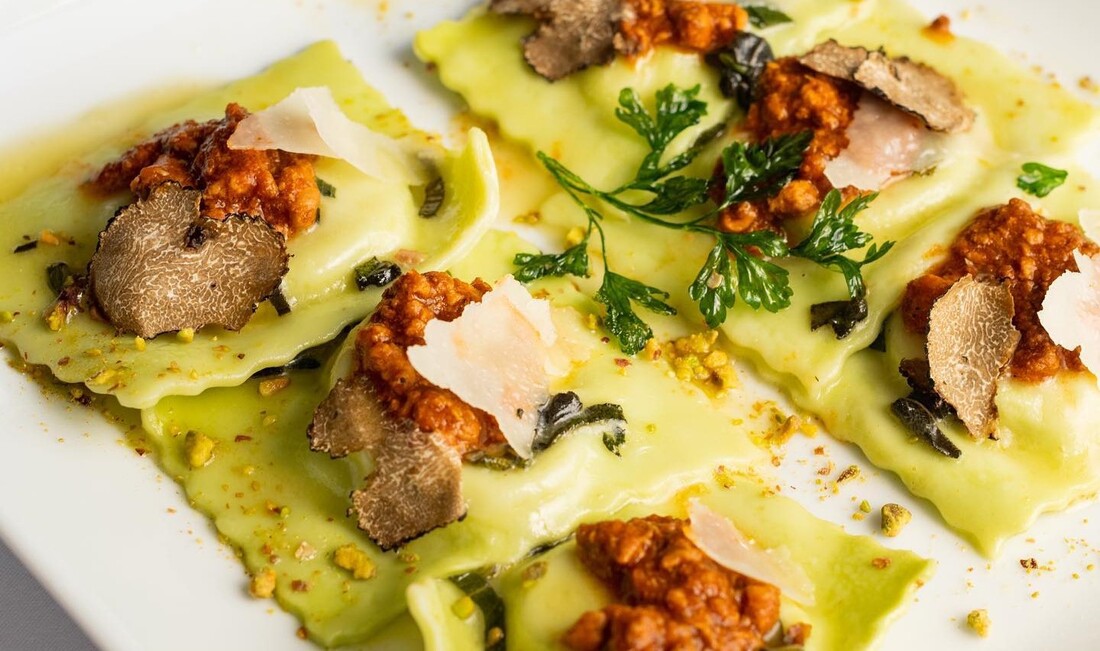
A beautiful pasta presentation at Amalfi
Restaurants advertising Italian fare in some fashion can be placed under one of the three broad headers, I believe: Italian-American; Americanized Italian; and simply Italian, which is much closer to what is served in Italy.
Italian-American easily claims the largest number of restaurants and also dishes. This is what most people think of when they think of Italian food. These restaurants serve items that come largely from the Italian-American tradition. The colors on the plate are largely red and whitish with some green: fried mozzarella, linguine in clam sauce, ravioli in a tomato sauce, cannelloni, fettuccine Alfredo, lasagna with ricotta, ground meat and tomato sauce, eggplant Parmesan, Chicken Parmesan, veal Marsala and, almost always, spaghetti and meatballs. And there is usually a lot on the plate.
Italian-American dishes are rooted in the big wave of Italian immigration from the 1880s until 1924. The vast majority of these people came from the Italian south where the tomato has a prominent place, and about half the dishes in the Italian-American canon originate in the Naples area like long-simmered tomato sauce, pasta and clams, and that familiar-looking lasagna. These items might have antecedents in Italy but were adapted and grew with American tastes, abundance, industrialization and pace of life. The people who were eating these dishes were Americans, as the immigrants’ offspring and descendants were, plus the generations of restaurant patrons. The preparations at these restaurants, regardless of the provenance of the recipes, are generally more robustly flavored, much heartier, and cheesier than is found in Italy. Restaurants need to serve what people want, and the menus are never static. Italian-American restaurants usually have fettuccine Alfredo and maybe penne alla vodka, dishes born after the great migration and in restaurants in Italy – to serve for tourists, actually – but have become very American in practice.
Here in Houston, the two original Carrabba’s and Damian’s are perfect and enjoyable examples. About a dozen years ago, I took a food writer from Italy and top Sicilian chef to Carrabba’s on Kirby to experience food from a prominent Sicilian-American restaurateur. They did not recognize the food, and frequently muttered the word “barocco,” baroque. For them, it meant extravagant and somewhat strange compared to the significantly smaller more streamlined dishes in Italy they were used to.
Similar to the Italian-American restaurant is the newest type, what I call Americanized Italian. These do not hew to the Italian-American traditions for the most part, and use more contemporary ideas and products from Italy, but the food is, generally, noticeably different than it is in Italy. These places are often from an experienced chef who puts their spin on Italian dishes, or a notion of Italian dishes, and might use the Italian cooking philosophy as an inspiration. There is always pasta made in house; showing off kitchen skills and providing a canvas for creativity. The quality of ingredients is usually high, and sometimes expensive. Italian descriptions are often used to portray a greater sense of authenticity or understanding, at least, even if the Italian on the menu is might be mangled. The best local instances are Potente and Ostia.
For me, restaurants that might be called Italian try to mimic how food is prepared in Italy, or in very capable and knowing hands express the ethos of Italy, and made with Italian products when necessary. The chef is almost always from Italy or has cooked there. They know Italy.
Italian food varies tremendously by locale and region, maybe more so than other cuisines. Trattoria offerings in Siena will look entirely different than one in Palermo or Verona. Here, Italian restaurants rarely try to have a regional or local focus, but will usually have a menu of appealing and somewhat familiar items from around the country. Tony May of the Gruppo Ristoranti Italiani and the landmark San Domenico in New York, one of the progenitors of alta cucina – expensive, fancy Italian food – in the U.S. told me that in Italy “the products are regional, but the cuisine is Italian.” Those Italian products were tough to get here until somewhat recently. May said in 2008 that "twenty years ago it was very difficult to reproduce regional Italian cuisine…..A chef couldn't get imported Parmigiano-Reggiano or buffalo milk mozzarella, virgin olive oil, prosciutto di Parma, or balsamic vinegar. Now, everybody can buy the finest of such ingredients, and it's made a tremendous difference in the taste of the food."
Even with excellent and Italian products and an informed kitchen, the way we eat in this country is different than in Italy – no primo then secondo – what customers expect is not the same, and, most importantly, restaurants need to make money. "There's no point in being strictly authentic with an empty dining room," as Lidia Bastianich quipped a few decades ago. Italian restaurants here will almost always be at least a little different than any in Italy.
Restaurants that can truly be called Italian include Alba, Amalfi, Da Marco and the new Bari. This Italian-ness usually comes at a cost. To taste that Italian, Italian products are necessary. Chef Renato De Pirro at Bari said about 70% of his are imported from Italy, for example. But there is also Davanti that is more casual and wallet-friendly.
I think that it’s fun to mention, that for any of these three broad types of restaurants, including the most Italian ones, there will nearly always be a steak on the menu. We Americans love steak.
A beautiful pasta presentation at Amalfi
 RSS Feed