MIKE RICCETTI
  • The best of Houston dining
    • Best Values
    • Breakfast
    • Chinese
    • Cocktails
    • Fajitas
    • Hamburgers
    • The Heights
    • Italian
    • Indian / Pakistani
    • Mexican
    • Middle Eastern
    • Pizzerias
    • Sandwiches
    • Splurge-Worthy
    • Steakhouses
    • Sushi
    • Tacos
    • Tex-Mex
    • To Take Visitors
  • Musings on Houston Dining
    • The best new restaurants to open in 2025
    • The best new restaurants to open in 2024
    • The best new restaurants to open in 2023
    • Houston's Italian restaurant history
    • Restaurants open for lunch (or brunch) on Saturday
    • Restaurants open for Sunday dinner
    • Restaurants open for lunch on Monday
    • Restaurants open for dinner on Monday
    • The top 10 new restaurants of 2022
    • The top 10 new restaurants of 2021
  • The margherita pizza project
  • The martini project
  • Italian restaurant history
  • Italian & Italian-American
  • Entertaining tips
    • Booze basics
    • Styles of Cheeses
    • Handling Those Disruptive Guests
  • Wine
  • Beer
  • Cocktails and Spirits
  • Miscellaneous
  • Blog
  • The best of Houston dining
    • Best Values
    • Breakfast
    • Chinese
    • Cocktails
    • Fajitas
    • Hamburgers
    • The Heights
    • Italian
    • Indian / Pakistani
    • Mexican
    • Middle Eastern
    • Pizzerias
    • Sandwiches
    • Splurge-Worthy
    • Steakhouses
    • Sushi
    • Tacos
    • Tex-Mex
    • To Take Visitors
  • Musings on Houston Dining
    • The best new restaurants to open in 2025
    • The best new restaurants to open in 2024
    • The best new restaurants to open in 2023
    • Houston's Italian restaurant history
    • Restaurants open for lunch (or brunch) on Saturday
    • Restaurants open for Sunday dinner
    • Restaurants open for lunch on Monday
    • Restaurants open for dinner on Monday
    • The top 10 new restaurants of 2022
    • The top 10 new restaurants of 2021
  • The margherita pizza project
  • The martini project
  • Italian restaurant history
  • Italian & Italian-American
  • Entertaining tips
    • Booze basics
    • Styles of Cheeses
    • Handling Those Disruptive Guests
  • Wine
  • Beer
  • Cocktails and Spirits
  • Miscellaneous
  • Blog
MIKE RICCETTI

Mostly food and drink...

...and mostly set in Houston

The welcome utility of white Bordeaux

11/11/2018

0 Comments

 
​A few years ago I was invited to dinner at the home of one of the city’s top wine professionals who happened to be a very good home cook.  The dinner was great and the array of wines might have been as good or even better.  One of the highlights was a white Hermitage from the cult producer Jean-Louis Chave that was nearly two decades old at the time.  Something that I found interesting, and much more imitable at home, was the pouring of a quality white Bordeaux to start the evening.  Served with canapes, it was more than pleasant, refreshing with its cool temperature and acidity, making it both a welcome aperitif and a fine complement to the light fare to start.
 
With that memory in mind, I recently went to a tasting of the wines of Graves and Pessac-Leognan, a part of Bordeaux, south of the city, that is known for their dry white wines.  It produces much more red, nearly 80% of the total, and is famed for its dessert wines, Sauternes and Barsac, but there are a number of good-value white wines made primarily from Sauvignon Blanc often with Semillon and sometimes a bit of Muscadelle.  These Sauvignon Blanc-based wines from Bordeaux taste unlike than what is popular here – much less fruit-forward, less assertive, and with more evident acidity and often minerality.  The addition of the lemon accents of the Semillon plays a part.  The whites of this area come in a range of different styles, which was evident in this recent tasting.  The wines at the event ranged from $11 to $35 with most under $20.  None of the twenty wines I sampled were great, but most were good and nearly all were enjoyable.  Nothing approached the fantastic, complex and elegant Chateau Smith Haut Lafitte Blanc 2015 ($88) that I sampled at Spec’s 2015 Bordeaux in March that both the Wine Advocate and Wine Spectator gave scores of 96.  A few that I liked included Légende Bordeaux Blanc 2017 ($18), Chateau de Rolland 2017 ($35), Chateau Haut-Reys 2017 ($11), and Chateau Luchy-Halde 2013 ($14). 
 
I asked one of the servers who was from the region how the whites are consumed there, with or as an aperitif.  She said that it mostly with food; fish, chicken, veal, sushi were popular partners.  Oysters, too.  The wines I tasted at the event led me to believe, or confirm my belief, that white Bordeaux, which are almost always medium-bodied at most, works very well, maybe best, for most Americans as an aperitif and with appetizers – like how it was served at that wonderful dinner I had been invited to several years ago.  Served chilled, these pair well with the six-plus months of heat and humidity that we have here.  But, I have enjoyed these with chicken and fish in the past, too.  These white wines of Bordeaux can work well in a number of ways.  
Picture
0 Comments

Grand names for a reason

10/20/2018

0 Comments

 
​When I was leaving the tasting from the producers of the Grandi Marchi, an association of the biggest and most well-known family own and run producers stretching much of the length of Italy such as Antinori and Gaja, I asked an acquaintance who is a wine educator if he had been to the newly opened natural wine bar.  He said that he hadn’t, and that natural wines he’s had had never approached the quality of nearly all of the nineteen wines that we had just sampled.  So true, I was quick to respond even as I still keep an open mind to those often wild natural wines.
 
The wines we tasted were surprisingly good from start to finish, one from each producer.  Maybe I shouldn’t have been surprised.  But, nursing a slight cold, might palate was a bit dulled and in most tasting I have been to, there are always a few wines or more that I find no more than palatable or made in a style that I don’t enjoy.  There were a few wines that I viewed as no more than palate, or just decent, but a surprising fifteen of the nineteen I thought were excellent, including four that were phenomenal.  It was a terrific tasting, one of the best that I have been to.  Complexity and refinement were two notable characteristics found in most of the wines presented.  The only disappointment was from Alois Lageder, a top producer in the Alto Adige in far northern Italy, that decided to bring an obscure wine from its portfolio, a 100% of the very obscure Manzoni Bianco grape, rather than one of its many acclaimed wines.  I thought that they might have been trying to showcase something not currently distributed here in the hopes of some orders for it.  It certainly wasn’t a poor wine, but not one that showed well to me nor as nearly any other wine they might have brought instead would have.
 
Below are the wines from the tasting that you might want to seek out, especially if cost is of little object.  The first four I thought were exemplary.
 
Antinori Badia a Passignano Chianti Classico Gran Selezione 2013 – $46 – Round, long and beautiful and “a richly refined expression of Sangiovese in Chianti Classico” to accurately quote the Antinori representative.
Donnafugata Ben Rye Passito di Pantelleria 2015 – $47 (375 ml) – This famed dessert wine lived up to its billing with its wonderful and strong aromas and a big, mouth-filling presence and flavors not unlike a nice Sauternes whose high sugar content is balanced with a lot of acidity, helping make this “very powerful wine” a gorgeous one, too.
Gaja Conteisa Barolo 2014 – $270 – Refined, beginning with very enjoyable aromas, a beautiful taste with terrific balance including a paucity of tannins that was a surprise for a Barolo so young, and a terrific wine to drink right now.
Tenuta San Guido Sassicaia 2015 - $210 – Big, bold, and polished, this 85% Cabernet Sauvignon and 15% Cabernet Franc blend with well-integrated is a gorgeous expression of a common Bordeaux blend that is something all together different from Bordeaux and more so, the Napa Cabernets.
 
Argiolas Turriga 2014 – $70 – 85% Cannanou that was developed by famed winemaker Giacomo Tachis is had a big aroma, with tannins that nicely fades; a proud flagship for the brand
Carpene Malvoti 1868 Extra Dry Prosecco Superiore – $14 – Balanced with good acidity, and though light was mouth-filling and still very easy to drink
Col d’Orcia Poggio al Vento Brunello di Montalcino Riserva 2010 – $125 – Refined, long-lasting and powerful, but with fairly elegant tannins; what you desire from most Brunello Riservas.
Michele Chiarlo Cipressi, Nizza Barbera 2016 – $25 – With prominent acidity as expected with Barbera, it was a very enjoyed wine with less fruit than the others in the tasting, but certainly a very good wine with many foods.
Jermann Vintage Tunnina 2015 – $60 – 25% Chardonnay, 25% Sauvignon Blanc, 23% Ribolla Gialla and 22% Malvasia, aromatic, and almost luscious with the flavors of Chardonnay and Sauvignon taking duty at the first part of the sip while the Malvasia provided a touch of well-matched sweetness at the end
Lungarotti Rubesco Vigna Monticchio Torgiano Rosso Riserva 2011 – $50 – This fairly refined wine made entirely of Sangiovese nicely paired the fruit and acidity of the grape with a proper amount of oak for an excellent result.
Masi Campolongo di Torre Amarone 2011 – $160 – Very dark, rich with prominent dark fruits and tannins, and also noticeable acidity that was not overly rich nor strong for an Amarone, its 16% ABV well hidden by the expertise of the winemakers, and easily drinkable now.
Mastroberadino Radici Taurasi Riserva 2011 – $65 – A refined version of Aglianico that had a lot going on though with tannins only present and the end of the taste and nicely integrated with the rest.  We were told that this will be even much better in five to ten years.
Rivera 2012 Il Falcone Riserva Red – $45 – Mostly from the less known Nero di Troia grape of northern Puglia, this was somewhat aromatic, round and elegant with enough fruit and some tannins
Tasca d’Almerita Rosso del Conte 2014 – $57 – Over 60% Nero d’Avoloa, this wine was long-lasting and balanced with some ripe fruit that was very pleasant.
Umani Ronchi Campo San Giorgio Conero Riserva 2012 – $70 – This 100% Montepulciano was grapey, mouth-filling with ripe tannins that was slightly chewy, but almost elegant, a refined version of the varietal.
 
There is a reason that these wineries sport many of Italy’s most well known labels.  They often make excellent wines.
Picture
0 Comments

Grechetto, the white star of Umbria

8/19/2018

0 Comments

 
​As the it was quite warm during a trip to Umbria in June, white wines were very much welcome, especially so since our villa did not have the air conditioning as was advertised.  Thankfully, the white wines of Italy have gotten so much better in the past couple of decades, it’s gotten easy to find a palatable one for a comparative song in much of the country.  And Umbria has been known for years for Orvieto that’s produced around the town in the southern part of the region.  It’s made with at least 40% Grechetto, which gives it most of its character.  About which, the useful Wine Folly website opines about Umbria: “Find yourself an Orvieto, or better yet, a wine made with the region’s star white grape: Grechetto.”
 
We did.  Very nicely, the Chiorri Winery was essentially across the street from the property we were renting and we made good use of the proximity.  Among our first purchases were a couple of 5-liter boxes of Grechetto for the astoundingly low price of €2.10 per liter.  This was a ridiculously low price for a quality wine and a nice expression of the Grechetto grape, made simply with fermentation and a brief amount of aging in stainless steel.  Medium-bodied, dry, and featuring pleasant aromas of tropical fruit, it had a welcome balance of fruit and acidity on the palate and a longer finish than might be expected for something dispensed from a cardboard box.  It was very easy to drink alone, a nice pairing to the heat and humidity, and also complemented most of the lighter fare we had before dinner.  We ended up splurging another $15 or so for five more liters before the week was out.  Even my brother, who usually only drinks whites with fish and other foods when necessary, really enjoyed the Grechetto during our stay in Umbria.
 
What he liked even more was a more serious, and expensive, version from nearby Terre di Margaritelli winey, their Greco di Renabianca, made from 100% Grechetto and seeing some time in French barriques, an unusual treatment for this varietal. Fuller-bodied than the other Grechettos we had, it still had the pleasant fruitiness and good acidity but a deeper and richer flavorful though still balanced.  The oak aging seemed to provide more character than it took from the natural fruit flavors and the acid.  Though it similarly utilized small oak barrels common with many of the New World chardonnays, this wine did not have rich buttery and brioche notes and muted acidity that I find in too many of those.  As I was enjoying in their tasting room, an early thought was how well it would go with roast chicken.  And that it would be an excellent choice for Thanksgiving, too, helping out that inevitably dry turkey meat.  At around €15-20 per bottle, I thought it was a wise purchase – and I should have a few bottles coming my way if the winery every fulfills my order from June.
 
The wines of Chiorri and Terre di Margaritelli are available in a few states, though, unfortunately not yet in Texas.  And Grechetto can be tough to find here.  It’s worth keeping it in mind, though.


A bunch of Grecchetto grapes in Umbria.  By marco valerio - originally posted to Flickr as uva, CC BY-SA 2.0, https://commons.wikimedia.org/w/index.php?curid=4170841
Picture
0 Comments

When looking for a good white wine while traveling in Italy, simply look for Collio

8/4/2018

0 Comments

 
​I was curious what the favorite wine was during our family’s recent trip to Italy.  Over the course of the two and three weeks we were there, a very laudable amount of wine was consumed.  The one that was like the best, at least the wine that garnered the most emphatic response was the Sauvignon Blanc from Venica & Venica Ronco del Cero Collio Sauvignon.  At least I am pretty sure that it was it.  I ordered it at the excellent Michelin-starred restaurant, Parizzi in Parma – looking for a white from the Collio that I thought would be a good match with a dish my sister and brother were ordering – but didn’t drink it as a red that seemed much more appropriate for meat dish.  I missed out on that but had a few whites from the Collio during the trip, and those were each quite tasty. 
 
The Collio is located in the region of Friuli, the most northeastern region in Italy that abuts the Alps and Slovenia.  “This is the finest white-wine area not only in Friuli but in all of Italy.”  That observation about the Collio is from Italian Wine for Dummies, which is actually a very good resource. The mild climate buttressed by the nearby Adriatic and the protective mountains to the north plus hill-laden vineyards atop unique, mineral-rich soil help provide nearly ideal conditions for several white varietals; and, excellent conditions for several red ones, too.
 
The whites from Collio are generally quite rich and fuller-bodied than the typical Italian whites, often with evident minerality and vibrant acidity. The wines are generally very well-made and approachable for most drinkers while having enough verve to excite an expert. Many have the ability to age. These are serious wines, even including the usually forgettable Pinot Grigio. Winemaker Roberto Felluga of Villa Russiz told my wine industry group when I visited several summers ago that his reserve Pinot Grigio “can keep for a minimum of ten years,” something that you certainly should not try with a Pinot Grigio plucked from the supermarket shelf.
 
Though the wineries in Collio and Friuli are prouder of wines made from the native (Tocai) Friulano, Ribolla Gialla, and Malvasia grapes and efforts with Sauvignon Blanc and Pinot Bianco, it is Pinot Grigio that helps pay the bills. “Pinot Grigio is what changed the economy here” for grape-growers and wine-makers a few decades ago, I was told by a producer. It was famed food and wine writer Luigi Veronelli who recognized the area’s potential for Pinot Grigio. These wines then began to find popularity in markets around the world.
 
So, if Pinot Grigio is a must, look for Collio or Colli Orientali, a neighboring appellation. Otherwise, you are better served with a Ribolla Gialla, Friuliano or Sauvignon. The Friuliano, indigenous to the region, goes especially well with most seafood dishes and Sauvignon has the heft to stand up with a little heartier fare. Eric Asimov in the New York Times has written about the utility and quality of Friuliano from Friuli. There is also excellent Malvasia, Pinot Bianco and a white blend simply titled “Collio,” whose mix of typically three varietals varies by producer that are almost always very good wines.
 
Another nice thing about the whites from Collio and Friuli, unlike the top reds from Tuscany or Piedmont, these will rarely cost more than €40 at a restaurant in Rome and elsewhere in Italy, and most are much less. That is a little more expensive than a bland longtime Roman trattoria staple Frascati, but the additional tariff is certainly worth it. And, you are on vacation, anyway.  Friuli and especially Collio are also names to keep in mind when back at home.  Also, Brda, which is Slovenian for Collio, as the region straddles both sides of the border.  These laudable wines from Slovenia are increasingly being found on wine lists here and in Italy.


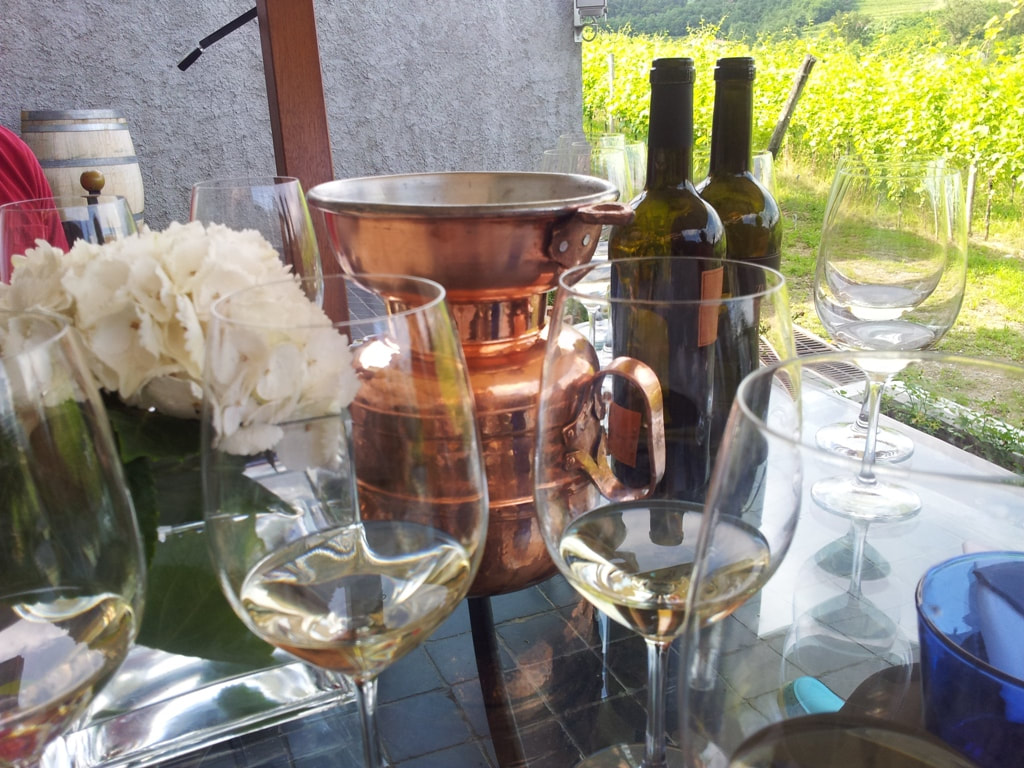
Enjoying some delicious white wines at the Zuani winery several years ago in the Collio, with both the Collio and Brda in the background.
Picture
0 Comments

A Sagrantino I actually liked

7/8/2018

0 Comments

 
​I do not like Sagrantino.  It has to be my least favorite Italian grape.  I’ve had some highly rated Sagrantinos, too, including several shipped from the acknowledged leader in the varietal, Arnaldo Caprai, around an interview I had with proprietor Marco Caprai several years ago.  Though certainly very well-made wines, I did not really like any of the three, even after lengthy decanting, even the one retailing for over $100.  My general dislike of Sagrantino was confirmed during a recent week in Umbria, where the red varietal has become the region’s vinous calling card. 
 
Sagrantino produces rich, dark wines that I find to be unpleasantly pretty much all tannins and virtually no fruit.  These are wines that are need to be consumed with a lot of fat to help mitigate those tannins.  Even with a fatty, tasty grilled Fiorentina cut of steak during the trip – seemingly the ideal complement to the wine – I still did not like the few-year-old Sagrantino with it.  The simpler boxed red wine that I switched back to was not only more pleasing alone but a much better pairing the steak to my tastes.  According to a manager at one of the wineries visited during the trip, Sagrantino typically needs nearly a decade before the wines are truly palatable as the tannins finally become integrated and mostly tamed while more pleasing flavors come to the fore.  I can see that. 
 
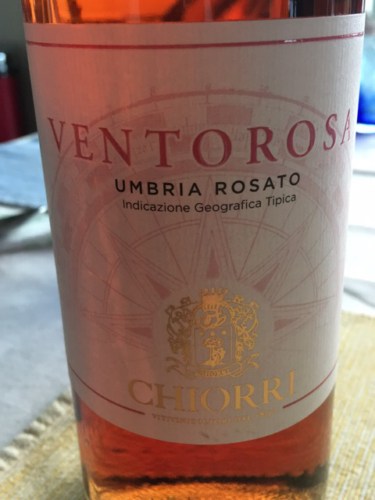
However, I did find a Sagrantino that I really enjoyed while in Umbria.  Our new friend at the Chiorri winery, conveniently located across the street from the villa we had rented, wanted us to try one of their rosés, the Ventorosa - Rosato I.G.T. dell’ Umbria that is made with 100% Sagrantino.  I was a bit worried when I saw it was all Sagrantino but trusted her.  And It was delicious.  And there was fruit.  I sensed strawberry, maybe blackberry and even a hint of pomegranate in a typically dry style with a very nice finish.  Even vinified to 13.5%, this dry rosé was scarily easy to drink alone and the two bottles disappeared quickly among our group.  Those aggressive tannins in the typical red versions of Sagrantino were pretty much absent, as they should be in a rosé. 
 
I don’t believe that this wine is available in the U.S.  I found it was just €6.90 (about $8) on a German site and at the Chiorri winery it is just around €5.20 (around $6).  Ridiculously inexpensive for such a quality wine, and one that I liked better than the Provencal rosés I have been consuming this spring and summer for several dollars more.  There is hope for Sagrantino for me yet, if for now in paler shade than usual for the grape.
Picture
0 Comments

Old World wines seem to pair best with the new wave of Houston cooking

2/19/2018

1 Comment

 
​The mantra at Underbelly, from where Chef Chris Shepherd won a James Beard Award a few years ago, is “The Story of Houston Food.” The wine list, however, strays far from the region and even the continent; two-thirds of it is dedicated to wines from Europe, the Old World. This affection is not unusual among the top local restaurants including, or especially, those with a strong locavore attitude in their food-sourcing and a penchant for creative cooking. Not just Underbelly, but places like Oxheart’s successor Theodore Rex, Pass & Provisions, Nobie’s, the new, casual neighbor of the Menil, Night Heron, and even the notably locally attune State of Grace, all boast wine lists where the majority of the space is dedicated to bottles from the historic wine-producing countries of Europe.  These make up over 80% of the list at Theodore Rex and about 70% at State of Grace.
 
Even at the upscale steakhouse, an unabashedly American restaurant concept, the wine lists, which were once dominated by big Napa Valley Cabernet Sauvignons, are finding more room for Old World wines, well beyond the long-present expense-account trophies from Bordeaux. Highly regarded Pappas Bros. Steakhouse has the lengthiest and possibly best wine list in the city and wines from Europe make up 60% of its offerings. Gary Lapuyade, who once led the wine program at another excellent home-grown steakhouse, Vic & Anthony’s. His top recommendation for steak?  A Hermitage from France’s Rhône Valley. When queried the other night about her top wine preference with a steak, Adele Corrigan, who runs 13 Celsius, responded with Cornas, another Syrah from the northern Rhone.
 
The reason for this European predominance at top local restaurants is rather simple. “At Oxheart, we use a great deal of Old World wine because it pairs with the food better than New World wines,” Justin Vann explained a few years ago. “Old World wines,” he continued, “have lower alcohol and higher acid, which generally make them more food friendly.”  Wines from the New World, which includes the United States, Chile, Argentina, Australia and New Zealand, tend to be much more fruit-oriented, sometimes aggressively so, less acidic, and often feature prominent flavors and tannins from oak aging. Most New World wines seem meant to be enjoyed first as a standalone beverage, without food. Contrastingly, most Old World wines seem to naturally complement food and some even need food to be enjoyable.
 
Matthew Pridgen, who manages the very personable and easily enjoyable wine lists both at Underbelly and One Fifth a few blocks away, opined, “I find Chris [Shepherd]'s food to be deeply flavored, and layered, but not heavy, and I think wines that have similar qualities make for the best pairings.”  Those just happen to be mostly from the Old World.


At a wine tasting in the Collio a few years ago.
Picture
1 Comment

Champagne is special, and helps makes the holidays even more special

12/22/2017

0 Comments

 
​I met the developer Giorgio Borlenghi and his wife a few years ago at an event at their Hotel Granduca in Uptown Park.  Not surprisingly, they were far better dressed and stylish than my girlfriend and I, especially me; what you might expect from a well-heeled Milanese couple.  During the course of the conversation, I had to query him about a dish that he had had on the menu of the hotel’s restaurant, Cavour, since it opening, Risotto allo Champagne – though, sadly, no longer there.  My question, specifically, was did it have to be champagne?  There was very high quality sparkling wine produced in the champagne method in Franciacorta not far from his hometown of Milan, after all, and the champagne is cooked in the dish.  “No,” Borlenghi was emphatic.  It had to be champagne.
 
There is something special about champagne.  I heartily agree with the sentiment, though I will be using a much cheaper sparkling wine when I make the dish.  I enjoy, and enjoy much more frequently, nearly all types of well-made sparkling wine from many of the current hipster-favorite pet nats or Pétillant Naturels, cremants from Burgundy and elsewhere in France, Spanish cavas, the similarly méthode champenoise versions from Franciacorta and Trento in Italy – including a fantastic meal with even more impressive wines at Tony’s hosted by Ferrari, the big sparkling house in Trento – and those in California like my longtime house sparkler from Roederer that remains a terrific value, Washington and even New Mexico, Prosecco, especially the impressively delicate and flavorful ones from the tiny center of Cartizze, and slightly different and less effusive if still dry Lambruscos that are becoming more commonly found around here.  But, there is something special about champagne.  Something better.  As much as I take pleasure in these other versions, the wines from Champagne are nearly always more flavorful, more pleasurable, more complex, the bubbles are usually smaller and more refined, the mouthfeel is seemingly more exquisite.  Champagne is just better, and that extends through the broad swath of house styles and styles, overall, from light and crisp to fuller, yeastier and flavors of brioche, the different types of fruit flavors that might be encountered from citrus to pear to raspberry and blackberry, and the broad number of producers.  Champagne is nearly always very good no matter the producer or the style, more so than other appellations, no matter if it is on the lower range of prices, just under $30.  I’ve never been disappointed with the quality over the years.
 
And, champagne makes the holidays more special, emphasizing and enhancing the celebrations.  All sparkling wine does that, but when the champagne is opened it seems more special – likely because everyone knows it’s more expensive than the other kinds of sparkling wine.  But, everyone will enjoy it even more.  I’ve bought both champagne and sparkling wine from elsewhere for the Christmas festivities, and I plan to enjoy them both.
Picture
0 Comments

The coolest bottle of port that you’ll ever find, found at 13 Celsius

11/19/2017

0 Comments

 
​Across from my seat at the bar at 13 Celsius the other night, I glimpsed a large and squat clear bottle with a metal pour spout affixed on top that drew my attention.  Maybe it’s my fixation with attractive or interesting containers, especially those that might hold alcohol that I might like, but I thought that this bottle might be pretty cool, regardless; it’s shape and size were certainly unique among the hundreds of bottles employed at what I believe is the city’s top wine bar.
 
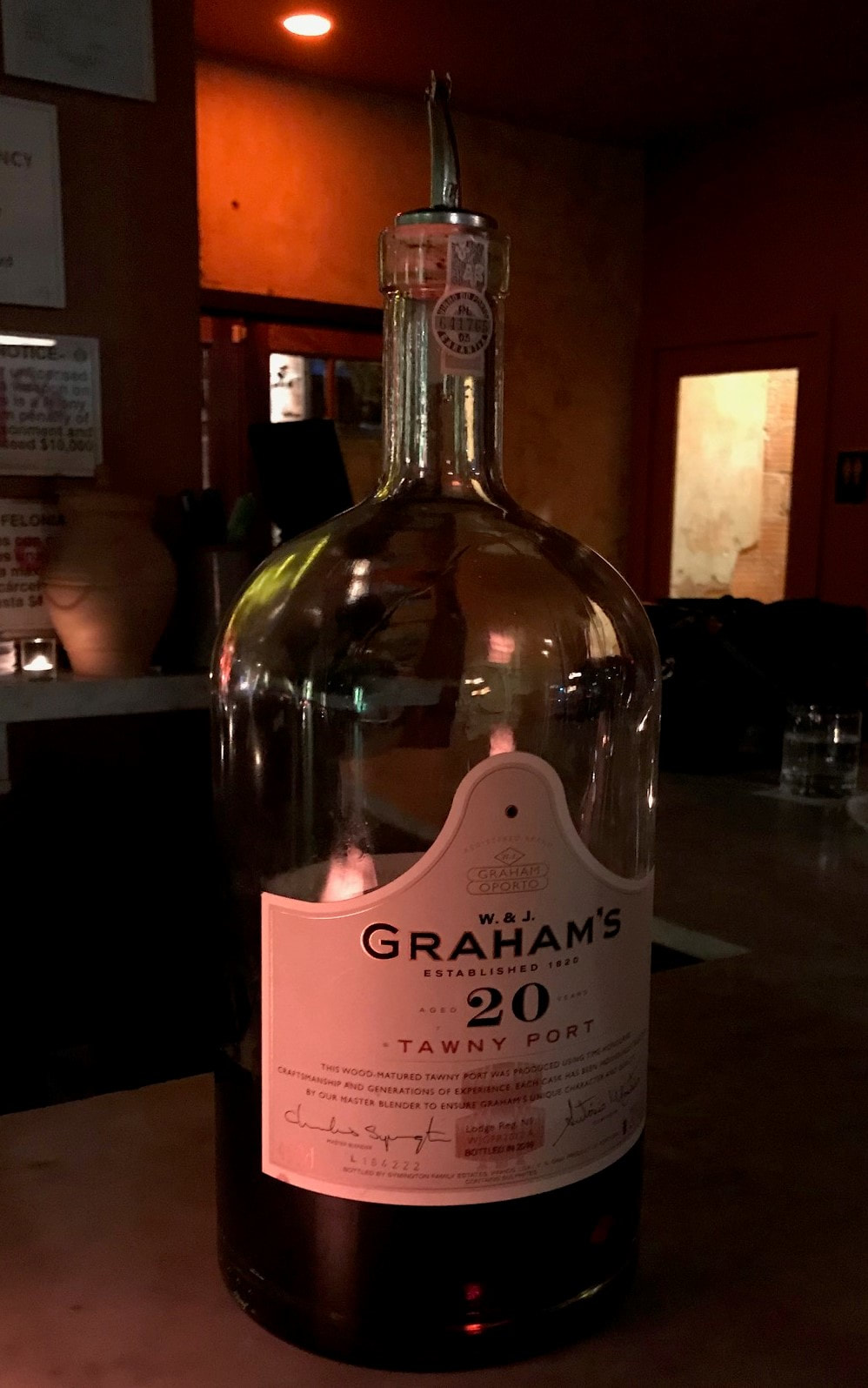
It proved to be a bottle of 20-year-old tawny port from Graham’s, a 6-liter bottle, certainly the largest bottle of port I had ever seen.  And, a very enjoyable port, to boot, one that I have long liked.  It’s $12 for standard 3-ounce pour that works very well at the end of the night or the end of the visit.  No telling what the entire bottle cost.  This is actually the second bottle the bar has had.  The first ordered in conjunction with their port and Madeira week went fairly quickly.  This one seems destined for the same fate.
 
13 Celsius
3000 Caroline (north of Elgin), 77004, (713) 529-8466
13celsius.com
Picture
0 Comments

A lighter shade of orange: Klinec

8/26/2017

0 Comments

 
​The Collio appellation at Italy’s northeastern edge offers an impressive array of wines.  A number of varietals, both indigenous and French, thrive in its unique, mineral-rich soil and a temperate climate that is buttressed by the Alps to the north and Mediterranean to the south.  Sauvignon, as Sauvignon Blanc is called there, Pinot Bianco, Friulano, and Ribolla Gialla all produce excellent wines.  Merlot also thrives, as does Picolit.  Even Pinot Grigio can approach seriousness in the Collio.  This region extends into neighboring Slovenia where it is known as Brda – both names essentially mean “hills” – and these Slovenian wineries make similarly excellent and unique wines.  Four of which, all from the small producer Klinec, were tasted at Vinology the other day, led by proprietor Thomas Moësse.
 
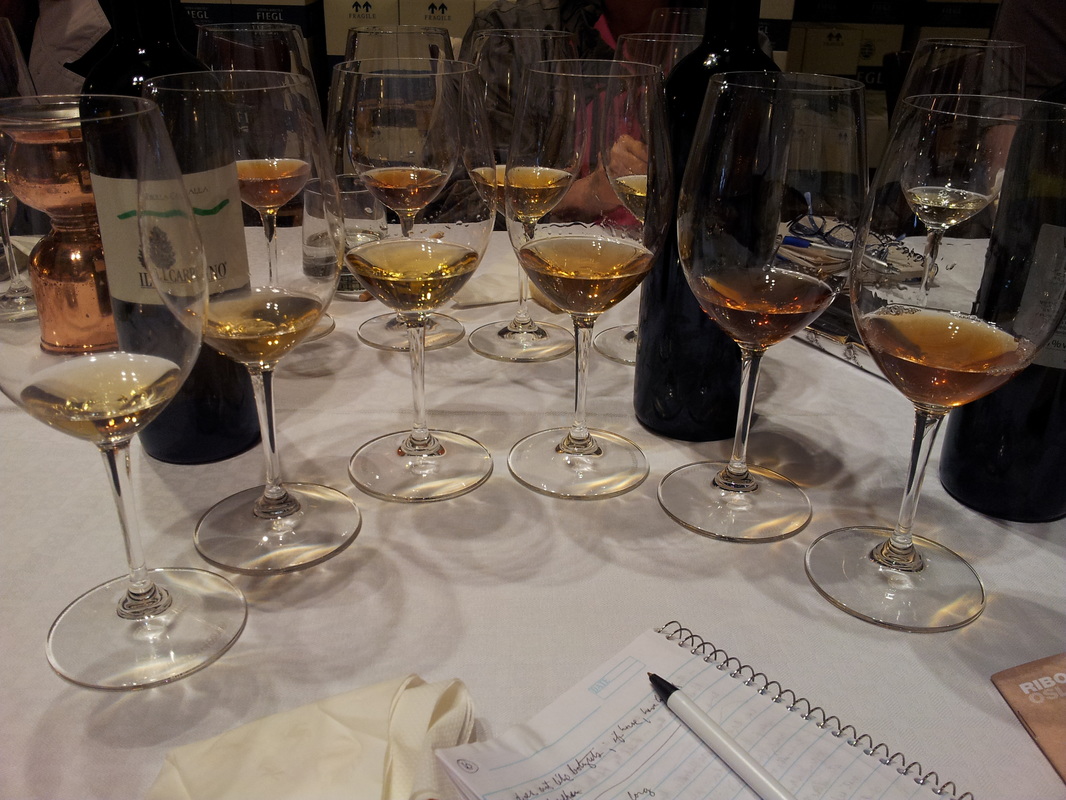
Ribolla Gialla was responsible for the most intriguing stop on a busy wine tour of the Collio I was on a few years ago, a tasting with the newest generation of producers of the Associazione Produttori Ribolla di Oslavia, Primosic, Radikon, La Castellada, Dario Princic, Fiegl and Il Carpino at the Fiegl winery in Oslavia.  Elsewhere in the Collio, the wines labeled Ribolla Gialla are light, usually meant for antipasti or as an aperitivo.  For that duty several wineries create very enjoyable sparkling versions.  In Oslavia, on the border with Slovenia, the wines of Ribolla Gialla are completely different. 
 
Their signature wines made with the varietal are heavier, more complex, and just plain different.  Oslavia is, after all, the spiritual home of orange wines and Ribolla Gialla is their vehicle.  Orange wines are white wines made like red wines, with extended skin contact.  The term orange refers to their hue.  These wines can have a color that ranges from a deep yellow to amber to even orange.  The prolonged contact with the skins results in tannins and additional body plus the darker color.  This process provides a heft that otherwise could only come from a higher alcohol content or aging in newish wood.  These wines also exhibit a greater complexity than most white wines and have the ability to age.  Because of its thick skin, Ribolla Gialla is ideal for orange wines. 
 
One of our hosts commented that “contact with skin can be the oldest or most traditional method” to make wine.  It was used by the older generations simply to ensure that the wines would remain drinkable until the next vintage.  With the diffusion of modern winemaking techniques this method eventually disappeared.  It was revived by Josko Gravner in the 1990s, and it eventually caught on with some of his neighbors in the tiny hamlet of Oslavia and their brethren next door in Slovenia.  Then winemakers elsewhere in Italy and in other countries picked up on it.  Still fairly rare, these wines are a phenomenon on wine lists and in stores in just the past few years.  Their uniqueness and relative scarcity have helped make them “the indie darling of the wine world” according to a Grub Street headline a few years ago, and an object of fascination for many sommeliers, especially those with a high hipster quotient, as Food & Wine noted. 
 
During the Oslavia visit, we tasted Ribolla Giallas made with skin contact ranging from one week to three-and-a-half months.  The ones we sampled at Feigl were not as atypical as the unusual winemaking process might suggest, and were notable for their dryness, balance, length of finish, and big mouth-feel. 
 
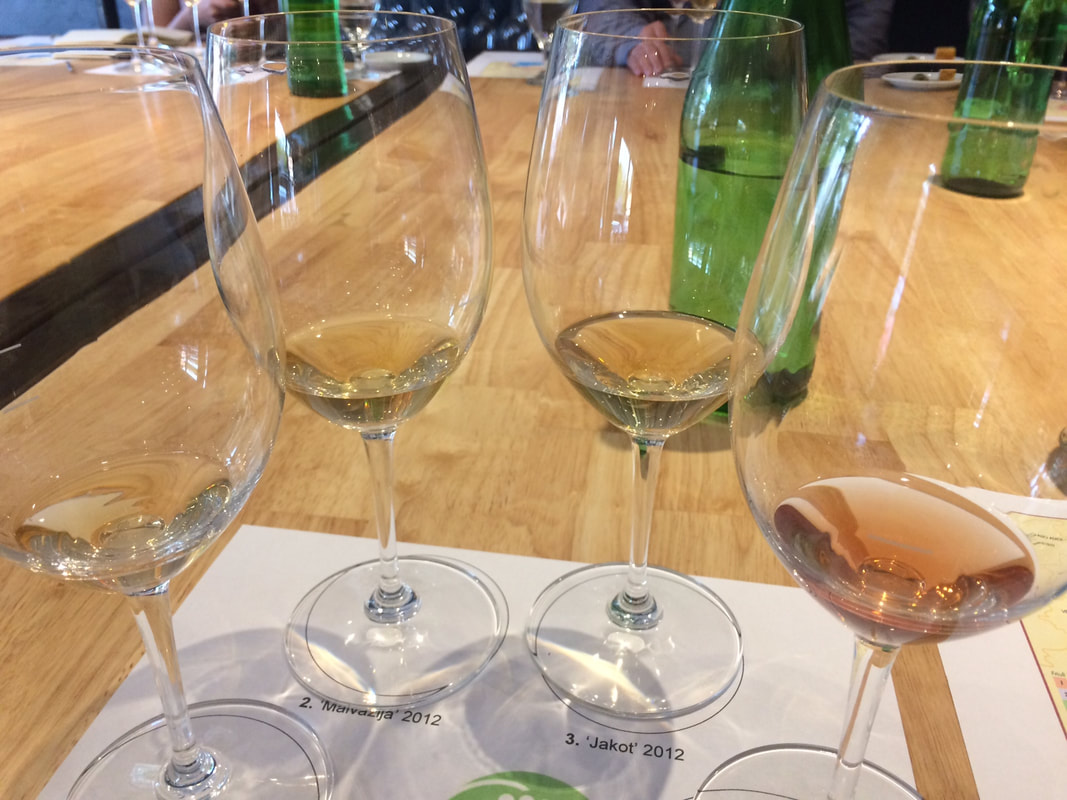
The four orange wines from Klinec tasted at Vinology, featuring 100% each of Rebula (Ribolla Gialla), Malvasia Istriana, Friuliano, and Pinot Grigio, were broadly similar, but noticeably different in that these were not as big or bold as the wines I sampled at the winery in Oslavia.  These were a lighter shade of orange, both in terms of hue and also taste.  In contrast to the lengthy skin contact favored by the producers in Oslavia, Klinec allows skin contact for much less time, just between five and ten days for the wines at Vinology.  I found these wines from Klinec still immensely flavorful, and these might be more approachable to the average wine drinker than the more typical of the orange wines from this part of the world.  I really enjoyed all four, which drank well even without food, but with the substantial amount of acidity and minerality in each, these would make excellent partners for a wide variety of dishes, as Moësse pointed out.  My favorite was the lightest, the Rebula, which I found to be the most vibrant and aromatic, and maybe refreshing soon after walking in from the 95-degree temperatures laden with humidity. The copper-hued Pinot Grigio, Gardelin on the label, was a close second, a little heavier, less perfumed, but with a fair amount of fruit and an incredible balance that was a feature of each of the four wines.
 
The wines are $41 at Vinology – for very well-made, expressive and interesting wines – and though drinking very well now, these should be even better in a few years and can likely easily last for another decade or longer.
 
Vinology
2314 Bissonnet (essentially at Greenbriar), 77005, (832) 849-1687
vinologyhouston.com


From left to right: Rebula, Malvasia Istriana, Fruilano, and Pinot Grigio
Picture
0 Comments

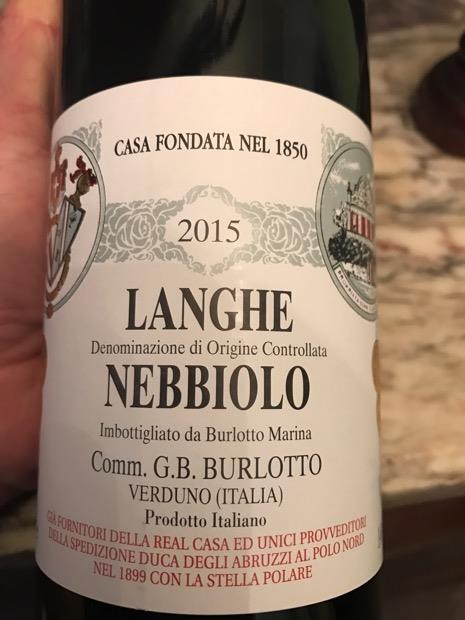
Found at Public Services: Burlotto Langhe Nebbiolo

3/12/2017

0 Comments

 
​With its eclectic, ever-changing, Old World-centric offerings of roughly 140 well-chosen wines, including roughly 50 by the glass, ranging from sherries dry and sweet to ports and Madeiras to sparkling and still wines in shades of red, white and several shades of rosé along with a policy of discounted wines during happy hour Monday through Saturday, Public Services downtown is a terrific place to discover new wines for the curious oenophile or regular wine drinker.
 
One such wine was surprising to me.  As much as my tastes are Old World, now even by the glass without food, I almost always find Nebbiolo-based wines to be too tannic to drink on their own, especially when young.  But, proprietor Justin Vann mentioned the Burlotto Langhe Nebbiolo 2015 ($13 by the glass) as something to try, and though his tastes are a little different than mine, his palate and judgement are excellent.  The wine was very enjoyable solo.

More floral on the nose and surprisingly evident cherry and strawberry tastes on the palate even more than the expected earthiness coupled with nice acidity, and leading to relatively light and integrated tannins for a decently, long finish.  An obviously very well-made wine, and nearly elegant, that was much more approachable than nearly anyone might expect from a Nebbiolo that had been harvested just a year-and-a-half ago.  There was none of the overly mouth-puckering dryness, though grape-based tannins were clearly evident.  This was quite tasty as it was, though certainly would be even better with some food.

Burlotto is long-standing and highly regarded Barolo producer utilizing large barrels and the more traditional methods, and this is an excellent introduction to their more complex and expensive Nebbiolo-based offerings.  It is probably also very good on the dinner table on most nights.
 
Public Services
202 Travis (at Franklin), 77002, (713) 516-8897
publicservicesbar.com
Picture
0 Comments

Brunellos ready for the restaurant

1/19/2017

0 Comments

 
The Brunello consortium is in town today, their only stop other than New York.  It's great for the city's wine community, one that features a surprisingly number of restaurants with Brunello and Rosso di Montalcino on their wine lists.

If you want to impress a client or a date at an Italian restaurant, ordering a Barolo or Brunello di Montalcino is usually the way to do it.  These are the top red wine appellations in Italy.  Several super Tuscans are as highly regarded as the best Barolos and Brunellos, but those usually require more wine knowledge and attention from your guests.  You’d hate to spend hundreds of dollars on Masseto and let that go unnoticed.  Same goes for Flaccianello, which also has a name that some might not take seriously.  Flaccianello.
 
However, “Barolo” and “Brunello” scream top-of-line, even at much lower price points than Masseto, Tignanello, Solaia and Sassicaia, and most of the wines from Gaja.
 
The problem with most Barolos and Brunellos at restaurants is that what is available on their wine lists – usually just the most recent vintages – are not old enough to be in prime condition.  This is especially the case with most Brunellos, even though the aging requirements are lengthiest in Italy, four-plus years for the “regular Brunello and five-plus for the Riserva.  Many of these wines take years to develop.  I had the opportunity to visit several producers a few years in and around Montalcino.  At a tasting at Fattoria dei Barbi, one of the oldest Brunello producers, the Brunellos we tasted were all still extremely tannic.  Our guide told us that Barbi’s Brunellos “need to wait five years at the very least.”  In late 2012, the 2004 vintage was the youngest of their Brunellos that was ready to drink.
 
Another issue is that Brunellos are big and usually very tannic wines that demand big, and usually, fat-laden flavors.  The most common answer I received from producers to my query of what food best paired with their Brunello was “bistecca,” steak.  Dining at wineries and with Brunello for several days, the wine might go best with steak and beef, in general, but it can complement more than that.  Legendary restaurateur Piero Selvaggio of Valentino recommends Brunello with “braised meats, any form of steaks and wild boar and pici pasta with a rich meat ragù.”  The pici (or pinci in Montalcino) is the indigenous pasta of the area, which are like thick, soft strands of spaghetti.  More than bistecca, but big and meaty still work the best.
 
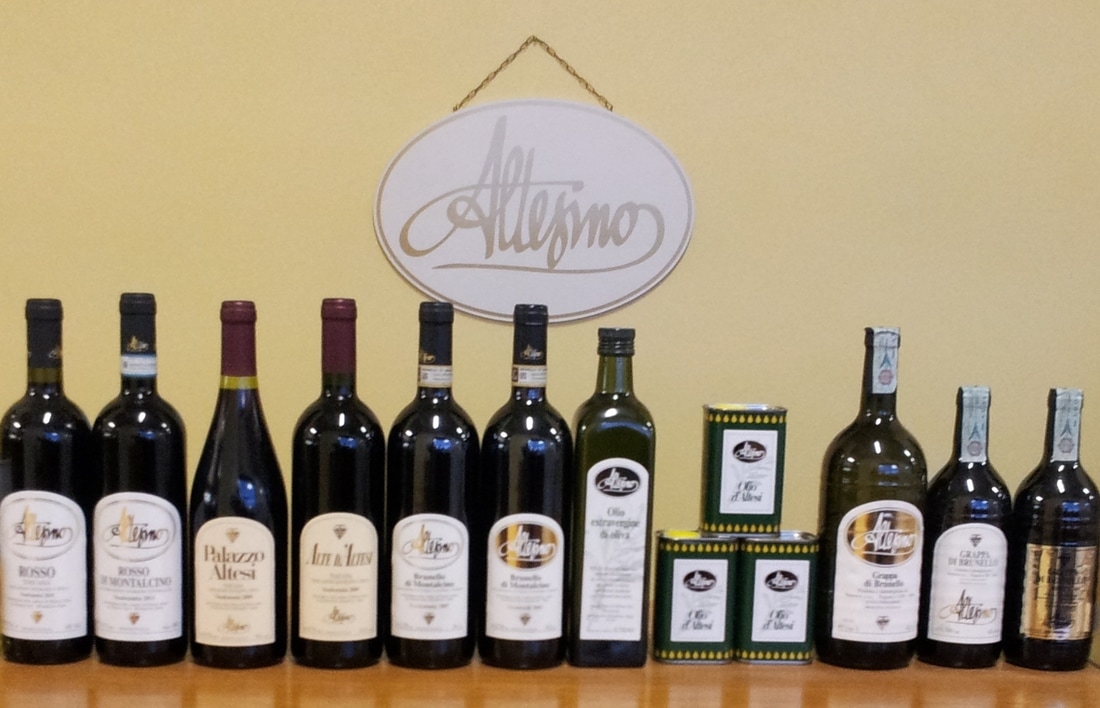
In a restaurant setting, your guests will likely be ordering somewhat disparate dishes, not all steaks. But, Brunello can still work, especially if it is a lighter style.  Two I tasted at an event in Houston last week sponsored by the Consorzio del Vino Brunello di Montalcino were from La Fortuna and Camigliano.  These wines from a recent vintage were medium-bodied, less tannic than typical, and extremely approachable and drinkable, much more so than the typical Brunello, which will need more time to develop.  These wines would be good to order at restaurant since, while still carrying the prestige of Brunello, these are likely ready to drink now, and the lighter style can appeal to a greater range of dishes than the rich meat preparations.  In Montalcino, I found the wines from Altesino readily approachable and enjoyable when young, too.
 
I asked Joel Mack of the informative, Italian-focused Vintrospective blog, who was a fellow traveler in November, for additional recommendations of a lighter style of Brunello.  He suggested, “La Lecciaia, La Poderina, La Magia, and perhaps Gianni Brunelli.”  A few more to remember when dining to impress.  La Magia is found at a number of restaurants in Houston.

Some of the products sold by Altesino
Picture
0 Comments

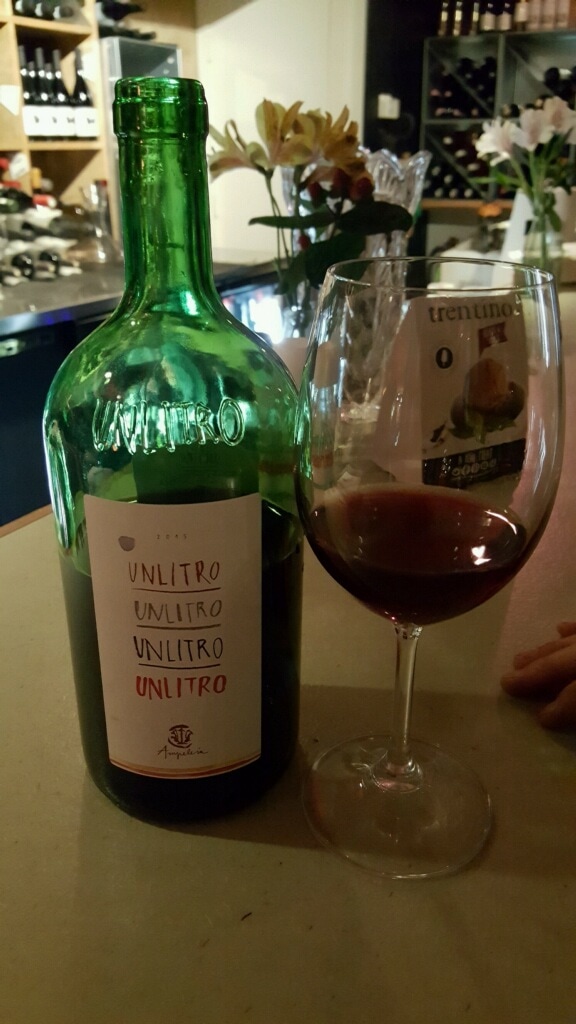
Found at Giacomo’s: unlitro, a very enjoyable red wine from Tuscany for a song

1/17/2017

0 Comments

 
​The other night at Giacomo’s I was looking for a light- or medium-bodied easy drinking red that would work well on its own and with light appetizers for myself and a couple siblings and their spouses as we waited for our parents.  After scanning the list for a minute or two, with a two or three inexpensive bottles in mind, I ask chef-proprietor Lynette Hawkins if she had any suggestions that would fit what I outlined.  She quickly recommended unlitro from star Aldo Adige-based winemaker Elisabetta Foradori, who was involved in property in the Maremma area of southwestern Tuscany, Ampeleia.
 
Unlitro, which means “A liter” in Italian, is pretty accurate description, as it a liter of red wine contained in an old-style squat bottle, not unlike those used by the cult Sicilian winemaker COS.  Unusually, unlitro is made mostly with Alicante Nero – which is Grenache, very unusual for Tuscany – with Carignan and Alicante Bouschet, a couple of other French grapes.  The wine was perfect for our needs, we all liked, with plans to purchase it in the future.  Also, it was just $28 for a liter.  That’s $28 for a bottle-and-a-third.  It is tough to imagine that there is as well-made and enjoyable red wine on a wine list in the Houston area for such a small tariff.
 
How to describe it?  The list at Giacamo’s does a very job doing so: “has flavors that are pure and lively with no oak to interfere with the myriad aromas of wildflowers, forest fruit, red berries, and subtle spices. A lingering hint of sweetness is balanced with refreshing acidity on the finish. This is both a lovely sipping wine and food pairing wine.”  I tasted some cherry and strawberry among the fruit, which was evident, but not predominant and a profile that lighter than the typical Grenache and Italian in profile.  And, $28, too.  Our table of nearly ten finished three bottles.
 
Unlitro is available retail locally at Houston Wine Merchants for $19.99.  That’s just an $8 markup over retail at Giacomo’s, a testament to their terrific wine pricing.  There were only four bottles left of unlitro at Houston Wine Merchant on Friday after I bought one.  It is worth sample and more.
 
Giacomo’s
3215 Westheimer (between Kirby and River Oaks Boulevard), 77098, (713) 522-1934
giacomosciboevino.com
Picture
0 Comments

When you think of red, also think of rosso

1/16/2017

0 Comments

 
When I saw Stefano Campatelli again in Houston in late January four years ago, the last time the Brunello consortium was in town, I commented to him once more that “Baby Brunello” is a terrible moniker for Rosso di Montalcino, a diminutive that immediately describes it as no more than second-best. He nodded, and replied diplomatically that there was not much that could be done about it, at least for now, as the reference has some traction among its producers. The agreeable Campatelli was the Director of the Brunello consortium, properly, the Consorzio del Brunello di Montalcino, who was in Houston for a tasting of wines from a few dozen wineries from the appellation.  The consortium has an event this Thursday, which I am looking forward to.
 
I had met Campanelli a couple of months earlier, in late November 2012. I was a guest of the consortium for a tour of several of the wineries, and a chance to taste many more of their wines on their home turf in southern Tuscany, and with the local cuisine. The namesake of the consortium and the prime reason for the visit, the estimable Brunello di Montalcino, is its star. This makes perfect sense, of course. Brunello di Montalcino is regarded along with Barolo in Piedmont as the most prestigious of Italy’s wine regions. Brunellos from Biondi-Santi, the winery that originated the style in the late 19th century, are among the most famous wines from Italy; the recent release of their 2007 Riserva at around $700 per bottle makes it about the most expensive, too. Other Brunello producers like Soldera (until a few years ago) and Valdicava draw nearly similar and continued critical acclaim from the international wine press.
 
But, it was the secondary wines, those bearing the Rosso di Montalcino designation, that were the ones that I enjoyed more frequently during that trip. I tasted many Brunellos that were going to be fantastic, but not yet. The sturdy Brunellos are often not nearly ready upon release – replete with significant tannins that carry them to a long life – and often take between five and ten years afterwards to hit their stride. The youngest of the Brunellos I really loved was from the 2004 vintage. I did enjoy several others immensely, but I liked many more of the Rossos, all of them, in fact, in large part because most of the Rossos are released ready to be consumed, or nearly so.
 
Rosso di Montalcinco was created in 1984 so that the wineries were able to earn money while their Brunellos aged the minimum of four-plus years after harvest, the longest aging requirement in all of Italy. Rossos can be released after just the following September. Similarly, 100% Sangiovese like the Brunellos, usually made with younger vines, the Rossos present another side of the grape that reaches its peak in the picturesque landscape of that part of Tuscany. Though the range of expressions varies, most Rossos are vibrant wines, showing buoyant cherry and sometimes strawberry notes typical of Sangiovese, a mild earthiness, usually gentle tannins, and a wonderful acidity. They display an easy drinkability that often belies their strength, typically between 13.5% and 14.5% alcohol these days. And, these are recognizing Italian; recognizably Tuscan. Rossos are different wines than their more structured, longer-lasting siblings. Not better, but different.
 
Rossos are much more like the top wines from the nearby Chianti appellations. Not surprising, given the similar geography, weather, aging, and makeup of the best Chiantis, which are entirely or nearly entirely Sangiovese. The famed Chiantis, too, typically garner more press than the Rossos.
 
The Rossos exhibit some of the diversity found in the Brunellos from their shared fifteen-kilometer-by-fifteen-kilometer appellation, reflective of the differences in terrain, elevation, microclimates and soils, not mention winemaking techniques. Barriques, tonneaux and large Slavonian oak botti might be employed for aging before spending a minimum six months in bottles before release. Though a single style does not exist, what each of the Rossos has in common is that it is an excellent food wine, as one might expect from Italy. Robust fare is especially well complemented with a Rosso like ragù Bolognese, or even game, according to one winemaker.
 
Though wines labeled Rosso di Montalcino can be absolutely terrific, they will, naturally, always be regarded as second-best in their own region. This means these Rossos might be easy to overlook, but it also makes many terrific values, even priced at $25 or $35. Kevin Zraly, the noted wine educator, led a couple of tastings at the Brunello event in Houston in January, 2013. He was as instructive and insightful – and infectiously energetic – as when he was a guest lecturer at the introductory undergraduate wine class I took at Cornell a couple of decades earlier. He remarked after the first one that “Rosso is one of the top ten values…a great, great wine.” Some further confirmation of what was readily apparent to me after my enjoyably heavy, nearly weeklong, consumption at the source.


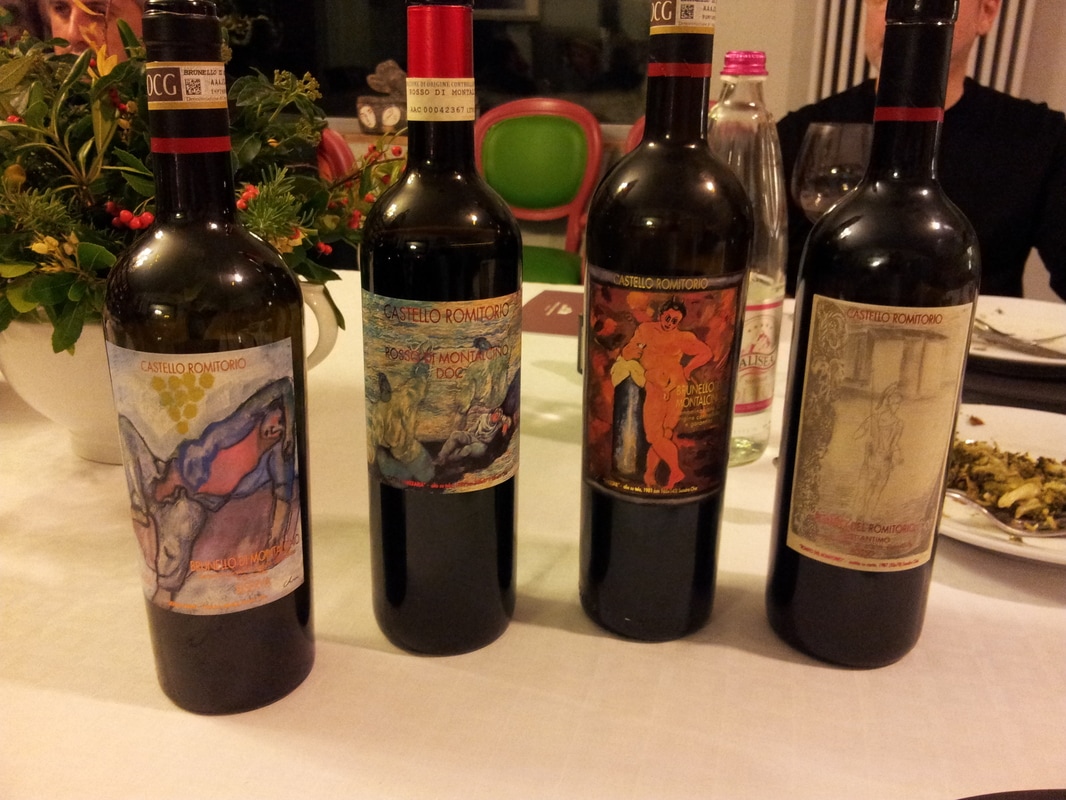
Wines at dinner at Castello Romitorio near Montalcino a few years ago.
Picture
0 Comments

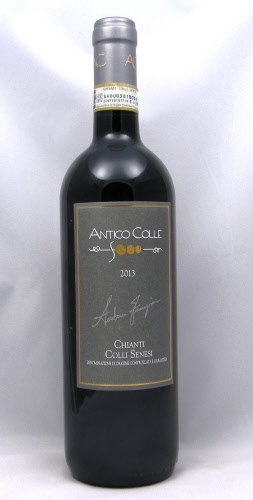
Found at 13 Celsius: Antico Colle Chianti for just $6

11/13/2016

0 Comments

 
13 Celsius is a great place to explore wines with their wide-ranging and very well-selected wines by the glass, some quite inexpensive.  A current one is Antico Colle Chianti for just $6.  Dry, medium-bodied with pleasant plum and dried cherry notes, this a straightforward Chianti with the expected level of acidity that is not complex; structured and, nicely, something more than simple.  The familiar Sangiovese-based flavors of Tuscany are most prominent, but it’s backed up with 10% each of Merlot and Cabernet Sauvignon. After ordering from a newly opened bottle, you’ll want to swirl this in your glass for a while, as it can ten- to fifteen minutes to properly open up. 
 
This is the type of wine to purchase by the case to accompany meals at home for its food-friendliness and overall quality and value.  There are probably not too many better wines available at Houston restaurants or bars for $6 now.
 
The Antico Colle Chianti is more fully Antico Colle Chianti Colli Senesi, which can be good to know, and a reason why this wine is so enjoyable. Everyone is familiar with Chianti, Italy’s most famous wine region, the home of the county’s most well-known red wine name.  And most frequent Italian restaurant-goers might recognize the emblem of the black rooster that adorns the bottles of Chianti Classico, the area that begat Chianti back in the 1700s.  Since 1932, Chianti has officially adorned wines grown well beyond the borders of the Chianti Classico appellation.  Today, there are seven subzones within Chianti, with Chianti Classico being something separate.
 
One of these is Chianti Colli Senesi, Chianti from the hills around Siena, which might be the best after Chianti Classico.  This subzone is actually three areas, one around the appellations of San Gimignano, another around Montepulciano – home to Vino Nobile di Montepulciano – and the southernmost, covering the areas of Brunello di Montalcino.  Wines from the Chianti Colli Senesi subzone can be great to chance upon, because these wines are often very similar to the well-regarded wines of Rosso di Montalcino or Rosso di Montepulciano that are the younger, lighter versions of their richer, more serious winery brethren.  Antico Colle Chianti is one such wine, and worthy of a try for $6 at 13 Celsius, if you enjoy Chianti or Italian wines in general.
 
13 Celsius
3000 Caroline (north of Elgin), 77004, (713) 529-8466
13celsius.com
Picture
0 Comments

The wines of Georgia

10/26/2016

0 Comments

 
​The trade group for the wines of Georgia put on a seminar and tasting for its wines the other day at Camerata that was illuminating, an insight into a unique wine-making area and often rather unique wines.  These bottles weren’t from the Peach State, but from Republic of Georgia, which lays claim to be possibly the oldest wine producing area in the world.  Other than seeing bottles in odd shelves at Phoenicia or maybe Spec’s’ on Smith Street, these wines are rather obscure for local consumers.
 
Well, Georgia is rather obscure, which might ring bells for being invaded by its neighbor Russia in 2008. It might be better known as Stalin’s birthplace (and that of his sadistic security chief Lavrentiy Beria, too). Located in the eastern edge of the Black Sea and bordered by Russia, Azerbaijan, Armenia and Turkey it extends from the sea into the Caucasus Mountains, it is home to about 4.5 million people and countless small winemakers, mostly those making it just for families.  The wine culture is so pervasive, according to Taylor Parsons, wine director of the restaurant Republique in Los Angeles who lead the event, that Georgian feasts typically budget a staggering three liters of wine per guest.  They like wine there.
 
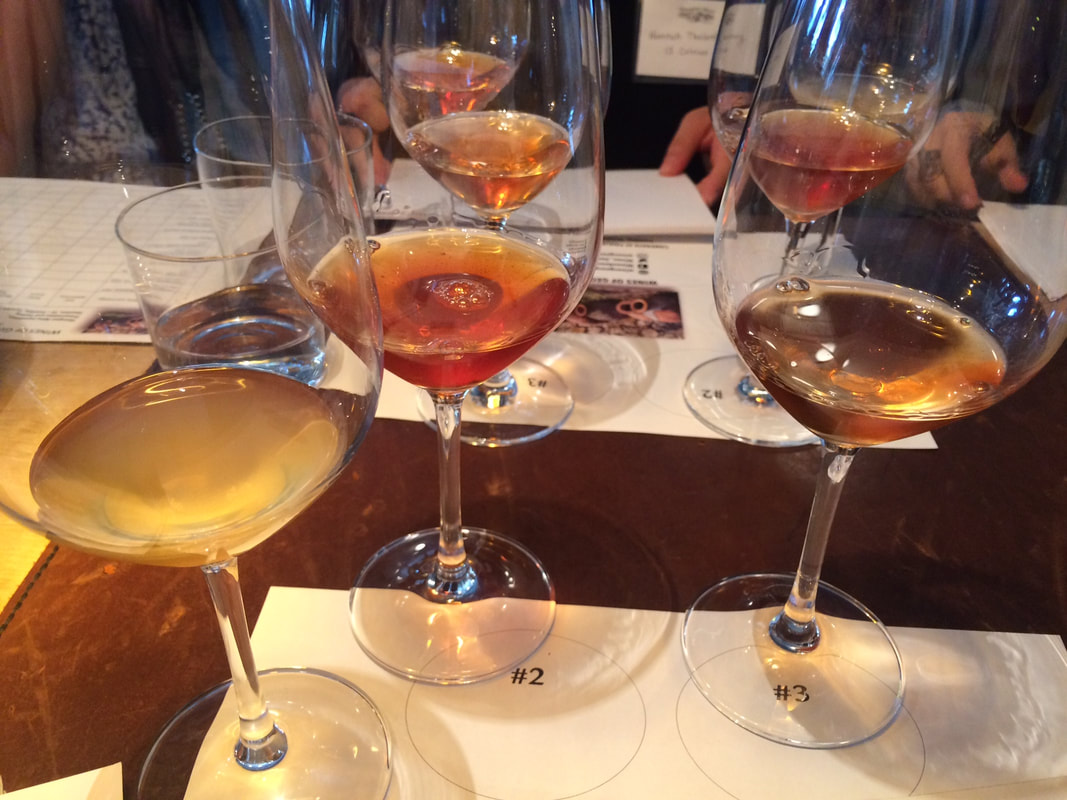
Georgian wines have garnered some press in recent years, mostly as an inspiration for winemakers in northeastern Italy by their use of amphora – called qvervi – for fermenting and aging wines, and for the so-called orange wines, white wines with extended skin contact and thus more body, tannins and often and orange hue.
 
But, what does it offer an American consumer, a consumer based in Houston?  I think so.  The nearly dozen wines tasted were all noticeably well-made and distinctive.  And possibly something to complement the way that you eat and drink.  They offer something different on the ever-growing world of quality wine.  At least a couple tasted broadly similar to Flemish sour beers, though lighter-bodied, but likely working very well as an aperitif.  My favorite of this style was the oddly named Our Wine made with the white Rkatsiteli grape fermented for six months in amphora that was bright, tart and flavorful with an enjoyably long finish.  The best red for me, and the best wine of the day, was Saperavi variety by Kindzmarauli Mariani that was excellent: balanced, with interesting fruit notes, very long-lasting, and modern-tasting in the best way.

That might have been the most modern style of wine, but it did not taste of the New World.  None of the wines brought tasted rustic, but distinctive, especially the two natural wines, which I found both discordant and not terribly pleasant.  All of the wines featured good acidity, and most would make for good food wines, each matching a different array of dishes. 
 
You might want to give one a try, though you probably will not be able to find many, if any, of the good wines of Georgia on local lists or stores.  But, stay tuned; there was interest in the room among wine buyers.

A few of the orange wines from Georgia.
Picture
0 Comments
<<Previous
Forward>>

    RSS Feed

    Author

    Mike Riccetti is a longtime Houston-based food writer and former editor for Zagat, and not incidentally the author of three editions of Houston Dining on the Cheap.

    Picture

    Archives

    June 2026
    May 2026
    April 2026
    March 2026
    December 2025
    October 2025
    July 2025
    May 2025
    January 2025
    December 2024
    November 2024
    October 2024
    September 2024
    August 2024
    July 2024
    June 2024
    April 2024
    March 2024
    February 2024
    January 2024
    December 2023
    November 2023
    October 2023
    September 2023
    August 2023
    July 2023
    May 2023
    April 2023
    March 2023
    February 2023
    January 2023
    December 2022
    November 2022
    October 2022
    September 2022
    August 2022
    July 2022
    June 2022
    May 2022
    April 2022
    February 2022
    January 2022
    December 2021
    November 2021
    October 2021
    September 2021
    August 2021
    July 2021
    June 2021
    May 2021
    April 2021
    March 2021
    February 2021
    January 2021
    December 2020
    November 2020
    October 2020
    September 2020
    August 2020
    July 2020
    June 2020
    May 2020
    April 2020
    March 2020
    February 2020
    January 2020
    December 2019
    November 2019
    October 2019
    September 2019
    August 2019
    July 2019
    June 2019
    May 2019
    April 2019
    March 2019
    February 2019
    January 2019
    December 2018
    November 2018
    October 2018
    September 2018
    August 2018
    July 2018
    June 2018
    May 2018
    April 2018
    March 2018
    February 2018
    January 2018
    December 2017
    November 2017
    October 2017
    September 2017
    August 2017
    July 2017
    June 2017
    May 2017
    April 2017
    March 2017
    February 2017
    January 2017
    December 2016
    November 2016
    October 2016
    September 2016
    August 2016

    Categories

    All
    Beer
    Cocktails
    Italian
    Margherita Pizzas
    Recipes
    Restaurants
    Wine

Powered by Create your own unique website with customizable templates.